
Ohio Public Records Act and Sunshine Laws
Ohio's open-records framework rests on ORC 149.43, commonly called the Ohio Public Records Act. It defines what counts as a public record, lists the categories that are exempt from release, and tells public offices how to handle requests. Any person can request a public record. There is no residency test. The office does not get to ask why you want it. The Ohio Attorney General's Sunshine Laws overview frames these rights clearly: they belong to any member of the public, and exemptions from disclosure are read narrowly, not broadly.
Court records bring in a second layer. Case documents filed in Ohio courts fall under the Ohio Rules of Superintendence, particularly Sup.R. 44 through 47. These rules create a presumption of public access to court records, but they also define what counts as a case document, what counts as an administrative document, and what personal identifiers must be removed from public view. So a county clerk's internal administrative records follow ORC 149.43 directly, while a court case file follows both ORC 149.43 and the Rules of Superintendence. The practical result is that both sets of records start from open access, but the procedures for restricting or redacting them differ.
The distinction matters. If you want a copy of a sheriff incident report, ORC 149.43 governs the request. If you want a filed motion or a court order from a Common Pleas case, the Rules of Superintendence also apply. Either way, the office must respond, must cite legal authority for any denial or redaction, and cannot simply refuse without explanation.
Lucas County Public Records by Office
Lucas County spreads record custody across several offices. The Clerk of Courts holds all appellate, civil, felony criminal, and domestic relations filings for the Court of Common Pleas. The office also manages auto title and watercraft records, runs an imaging lab that handles documents for other county agencies, and oversees the Central Records Center at 700 Adams Street. J. Bernie Quilter has served as Clerk since 1999 and launched a searchable online docket that drew more than one million visits in its first year.
Other offices hold other record types. The Lucas County Probate Court keeps marriage licenses, estate filings, wills, guardianship records, and adoption files. The Sheriff's Office maintains arrest reports, incident records, and jail booking data. County administrative departments produce their own records, which are stored at the Lucas County Records Center. That facility holds more than 47,000 boxes and 26,000 rolls of microfilm for 38 county departments, but it does not take public records requests directly. Requests must go to the office that created the record.
- Court of Common Pleas case files (civil, felony criminal, domestic relations, appellate): Clerk of Courts
- Marriage licenses and probate case files: Probate Court
- Arrest and incident reports, jail booking records: Sheriff's Office
- Auto title and watercraft records: Clerk of Courts auto title division
- Municipal court records: Toledo, Maumee, Sylvania, or Oregon Municipal Court, depending on jurisdiction
- County department administrative records: the originating department
Note: The Lucas County Records Center stores county records internally but is not able to process public-record requests from the general public.
How to File a Lucas County Public Records Request
The Clerk of Courts' 2025 public-records policy, posted at the county's public records request page, sets out the local rules in plain terms. No magic words are needed. The request does not have to be in writing. You do not have to say who you are or what you plan to do with the records. The request just has to reasonably identify the records you want. For a large or complex request, the office may give you an estimated timeframe and cost before proceeding. Writing your request down is still a good idea because it creates a clear record of what you asked for and when.
- Find the right office. Identify which county office created or holds the record you need. Court filings go to the Clerk of Courts. Marriage records go to Probate Court. Arrest reports go to the Sheriff. Municipal case records go to the relevant municipal court clerk. The Records Center does not handle public requests.
- Describe the records clearly. State the type of document, the case number or names of parties involved, the date range, and any other details that help the office find the file. A narrow, well-described request is processed faster than a broad one.
- Submit your request. The Clerk accepts requests in person at 700 Adams Street during office hours, and the office can send records by email at no charge when that is feasible. The Sheriff has an online request form. Probate copy requests use official online forms. Some offices accept mail or fax requests.
- Wait for the office to respond. Ohio law requires public offices to respond promptly. The Clerk policy uses the word "promptly" and says complex requests may receive a cost estimate and a timeframe. The Sheriff's form warns that missing required fields can slow processing.
- Pay any applicable fees and collect the records. Paper copies cost money. Email delivery is free under the Clerk's policy when it is feasible. Sheriff paper copies have their own fee schedule. Pay before production in most cases and confirm the payment method the office accepts.
Sheriff Public Records Request Form Fields
The Lucas County Clerk of Courts does not require a specific form. The Sheriff's Office, however, provides a structured request form at lucascountysheriff.org/record-request. The form collects specific details about the incident and the requester. Not filling in required fields may delay processing, according to the form's own notice. The table below lists every visible field from the Sheriff's public-records request form.
| Field | Required | Notes |
|---|---|---|
| Name of Person Requesting Records | Yes | Form warns missing required fields may delay processing. |
| Names of Parties Involved | Yes | Identify incident parties by name. |
| Date, Approx Time | Yes | Date and approximate time of the incident. |
| Location of Incident | Yes | Address or description of the incident location. |
| LSO, CAD, or RB# Received from On-Scene Deputy | Optional | Case, CAD, or report-book number if known. |
| Contact Information - Phone | Yes | Requester's phone number. |
| Yes | Used for electronic delivery when available. | |
| Fax | Optional | Alternative contact channel. |
| Type of Report | Yes | Select Accident or Crime. |
| Describe in Detail the Records Sought | Yes | Full description of the specific records requested. |
For Clerk public-records requests, no standard form is required. A simple written description that reasonably identifies the records is enough. If the Clerk asks for your name or contact information, the office must first tell you that this information is optional and is only used to help locate or deliver the records.
Public Records Fees in Lucas County
Different Lucas County offices publish different fee schedules. The Clerk's 2025 public-records policy, the Clerk Criminal Division FAQ, and the Sheriff's records page all set fees based on the type of record and how it is delivered. Do not assume one rate applies everywhere. The table below separates the published fees by office and record type.
| Office / Record Type | Item | Fee |
|---|---|---|
| Clerk of Courts (public records policy) | Paper copy (per page) | $0.05 |
| Clerk of Courts (public records policy) | Email delivery | No charge |
| Clerk of Courts (public records policy) | CD or other media | Actual cost |
| Clerk of Courts (public records policy) | Postage and mailing supplies | Actual cost |
| Clerk Criminal Division (case copies) | Paper copy (per page) | $0.10 |
| Sheriff's Office (paper records) | First 10 pages | Free |
| Sheriff's Office (paper records) | Each page after 10 | $0.10 |
| Sheriff's Office (paper records) | Payment method | Cash or money order only; in person |
| Sheriff's Office (video records) | Dash or body camera footage (per hour of video produced) | $75.00 |
| Sheriff's Office (video records) | Written cost estimate | Provided before production begins |
Video from dash or body cameras is reviewed and redacted as required by Ohio law, including under House Bill 315, before release. The Sheriff provides a written estimate first and collects payment before production starts. Electronic written records from the Sheriff are free when available in that format.
Court Records vs County Administrative Records
The line between a court record and a county administrative record matters more than most people expect. A court case document (a filed complaint, a motion, a journal entry, a sentencing order) is governed by both ORC 149.43 and the Ohio Rules of Superintendence, Sup.R. 44 through 47. Those rules define what a "case document" is, establish the presumption of public access, and set the process for restricting access. A county administrative record, such as a sheriff incident report or a Records Center document, falls under ORC 149.43 alone.
The Rules of Superintendence also control what personal data must be redacted from court records before they reach the public. Social Security numbers, financial account numbers, and certain protected addresses are stripped from public copies even if the underlying case is open. This happens automatically under Sup.R. 44-47 and does not require a separate request. For county administrative records, ORC 149.43 sets the redaction rules instead, and the list of protected identifiers is similar but not identical.
For a practical comparison of how the two frameworks meet in Lucas County, look at the Clerk's approach. The Clerk of Courts administers Common Pleas case files under court rules and operates as a public office under ORC 149.43 for its own administrative records. The same office, same building, two sets of rules depending on which document you want.
Lucas County Records That Are Not Public
Ohio law keeps several categories of records out of public reach. The exemptions are narrow by design, but they cover real record types that people often look for. Knowing what is off limits saves time and avoids unnecessary requests. Each restricted category has a specific legal basis, and the office denying access must cite it.
- Juvenile delinquency, abuse, neglect, and traffic records: restricted under ORC 2151.14 and juvenile court rules.
- Adoption records: confidential under ORC 3107.17; Probate Court handles adoptions but the files are not routine public records.
- Mental-health civil commitment records: restricted under ORC 5122.31.
- Sealed and expunged criminal records: removed from ordinary public access after a court order under ORC 2953.32; some government users retain limited access in set circumstances.
- Personal identifiers: Social Security numbers, financial account numbers, protected addresses, and similar data are redacted from public copies under Sup.R. 44-47.
- Grand jury materials and sealed indictments: not public until released by law or court process.
- Confidential law enforcement investigatory records: ORC 149.43(B)(8) protects investigative files that could endanger officers, victims, or witnesses, or that could compromise an active investigation.
Medical and HIPAA-covered records are excluded from Ohio public-records requirements under federal privacy law and ORC 149.43. Trial preparation materials and attorney work product also fall outside the public-records obligation. If you ask for a record that falls into one of these categories, the office must tell you the record is exempt and cite the legal authority. A blanket refusal without a citation does not meet the standard.
Federal Public Records in Lucas County
Lucas County sits within the U.S. District Court for the Northern District of Ohio, which holds court in Toledo, Cleveland, Akron, and Youngstown and serves the 40 northernmost counties of Ohio. Federal cases include federal crimes, civil rights litigation, federal-question civil cases, and diversity matters. Federal court records are searched through PACER and federal CM/ECF, not through Ohio state portals or the Lucas County Clerk of Courts. The Ohio Public Records Act and Sunshine Laws do not apply to federal agencies. Federal records follow federal court rules and federal privacy policies.
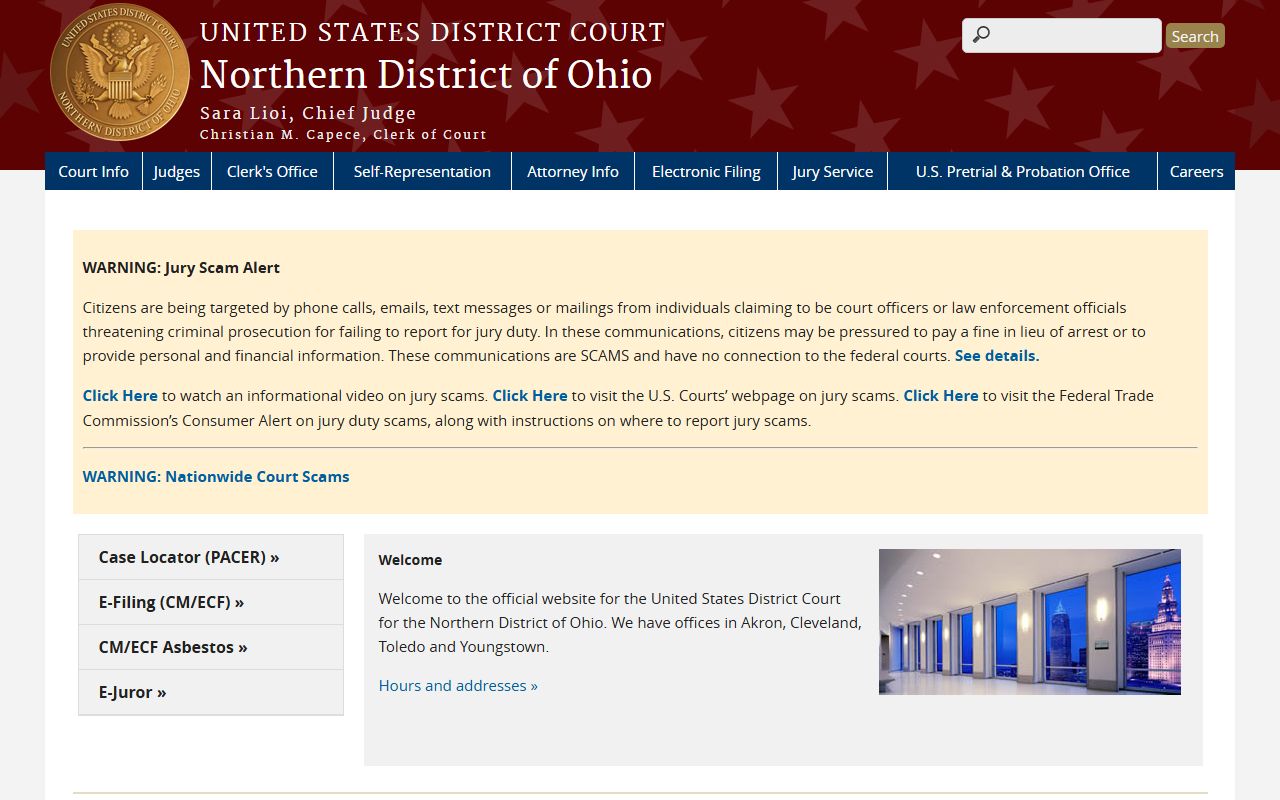
The Northern District of Ohio Toledo courthouse handles federal matters arising in the western part of the district. The screenshot below is drawn from the Northern District of Ohio court information page, which lists court locations, judges, local rules, and filing information for cases that originate in Toledo.
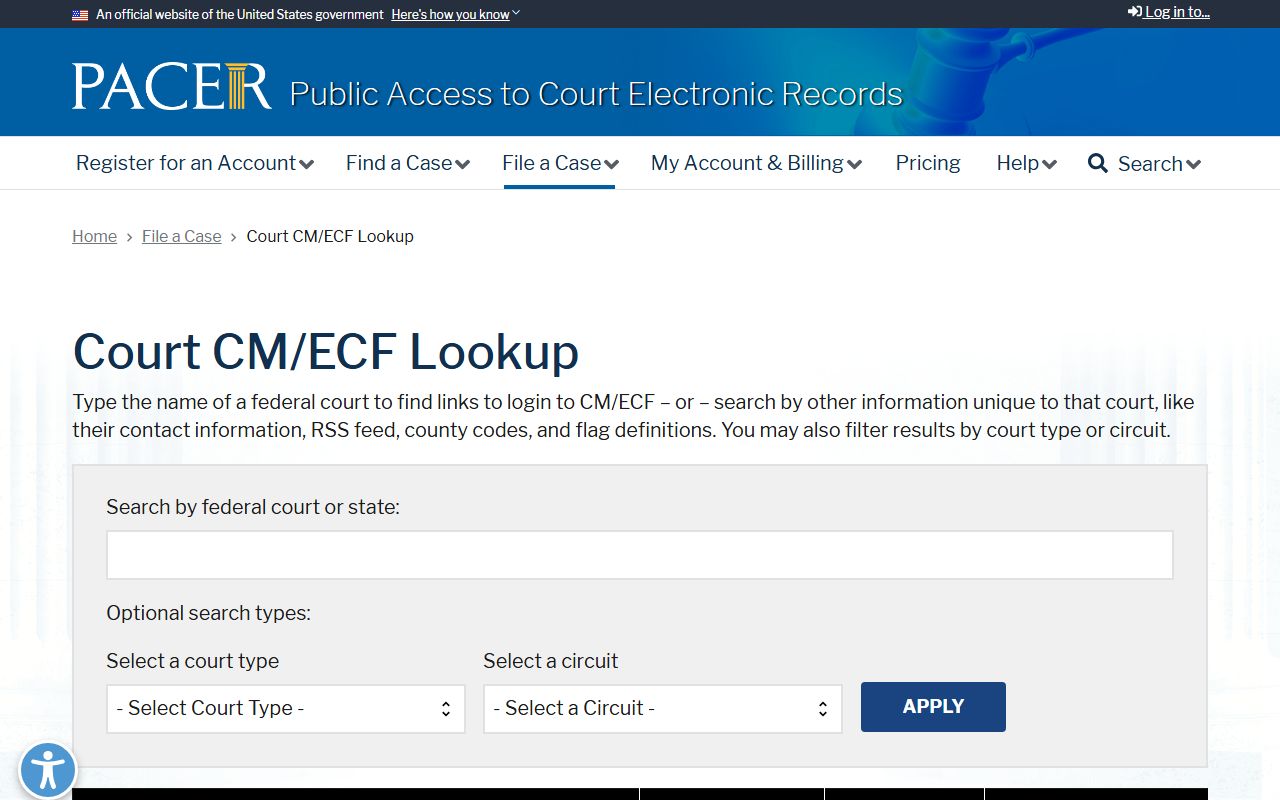
Federal cases in the Northern District are filed and tracked through the CM/ECF system. The image below comes from the federal CM/ECF court lookup, which lets you find the correct electronic-filing system for any federal court.
CM/ECF is the filing system; PACER is the public access portal. PACER charges per-page fees for downloading documents, but free alternatives exist for some opinions and dockets. The screenshot below comes from CourtListener, a free database of federal opinions and dockets maintained by the Free Law Project.
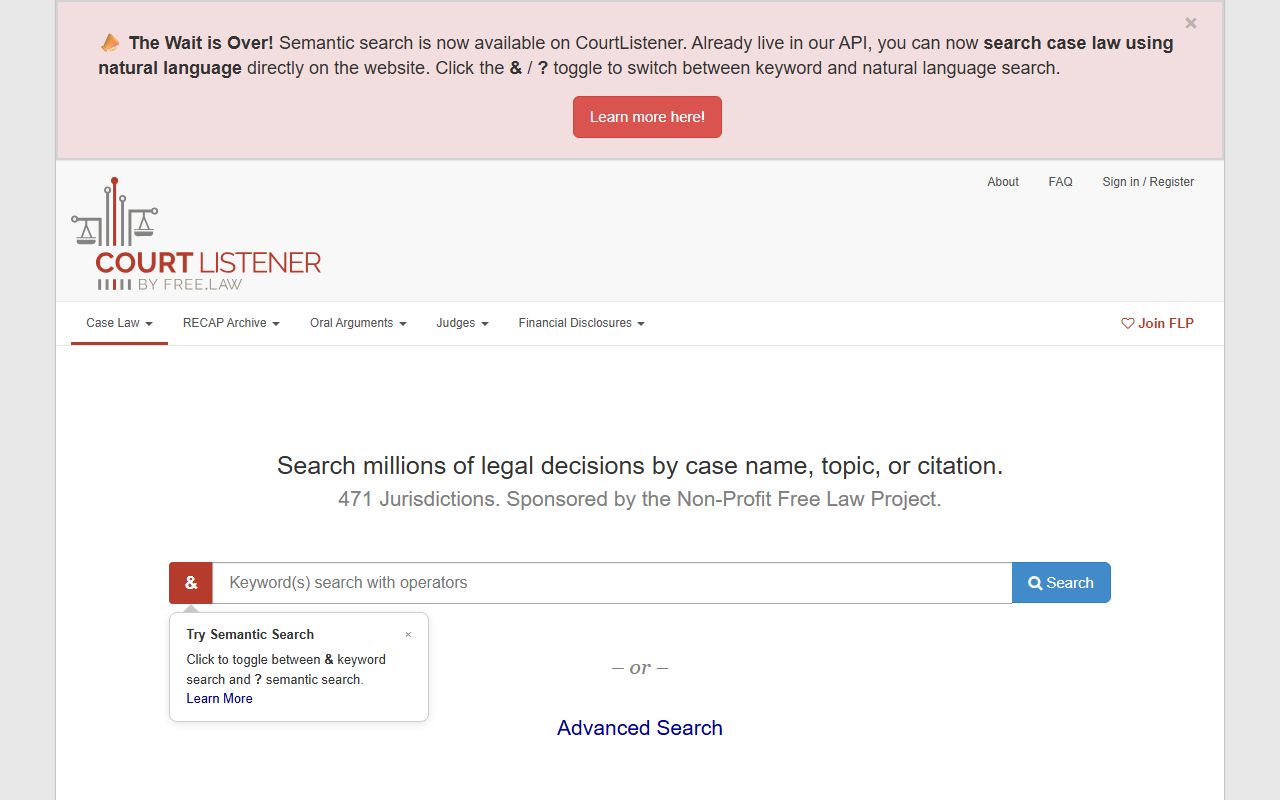
CourtListener does not cover every case or every document, but for published federal opinions and PACER-mirrored dockets, it is a cost-free starting point. Federal bankruptcy matters in the Toledo area go to the U.S. Bankruptcy Court for the Northern District of Ohio, and federal appeals go to the U.S. Court of Appeals for the Sixth Circuit.
Probate and Vital Records in Lucas County
Lucas County Probate Court handles estates, wills, guardianships, mental-health civil commitments, and marriage licenses. The court operates its own public case portal, Probate eAccess, which is separate from the Clerk of Courts systems. Marriage license records and probate case information are searched through that portal rather than through the Common Pleas docket links. The image below is taken from the Lucas County Probate Court forms page, where official forms for estates, guardianships, and marriage records are posted.
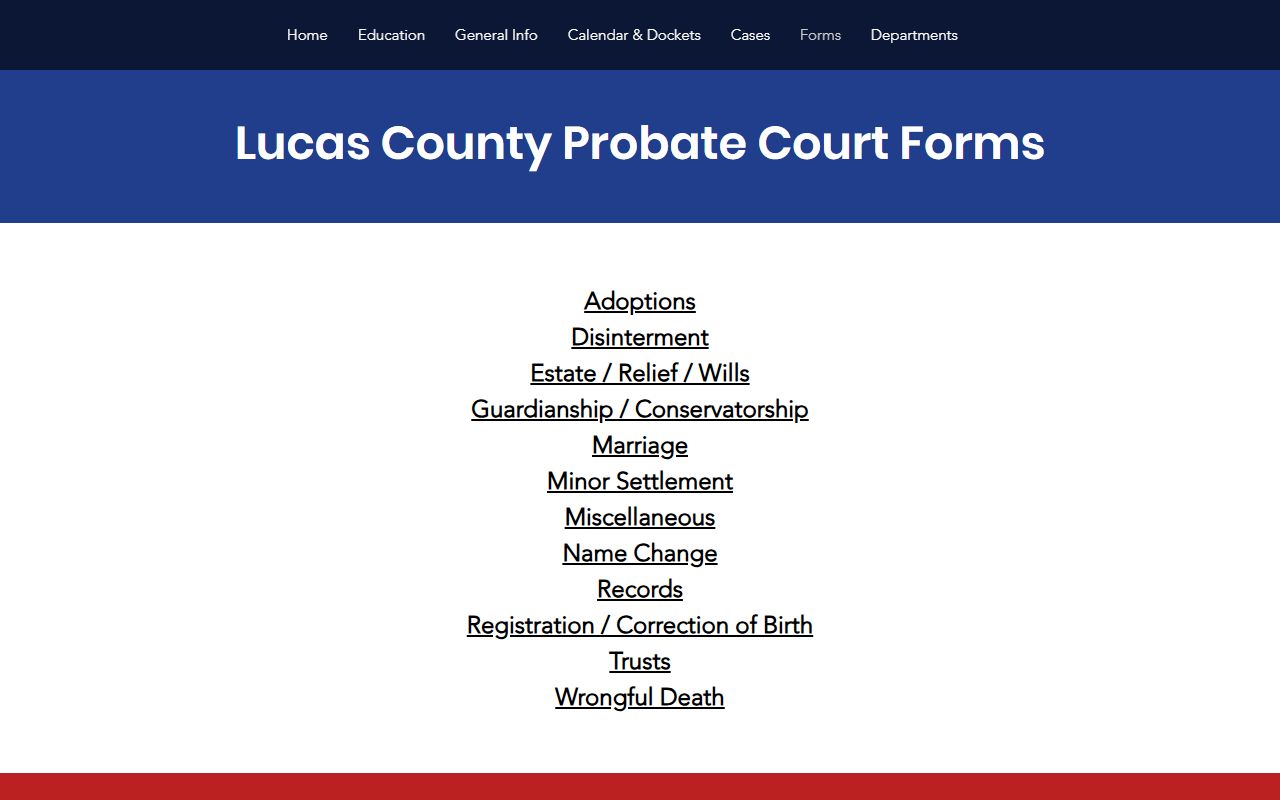
Probate forms cover a wide range: marriage license applications, certified copy requests, marriage abstract orders, affidavit of search requests, estate inventory forms, and guardianship filings. Certified copies of marriage certificates are mailed only, not emailed or faxed, and Probate asks you to allow about three weeks. Adoption and mental-health civil commitment files are restricted, so those records will not appear in a standard Probate eAccess search. For marriage records, call the Marriage License Bureau at 419-213-4361. For probate matters, contact the court directly at 419-213-4775.
If Your Lucas County Request Is Denied
An office that denies a public-records request or redacts part of a record must give an explanation and cite the legal authority that allows it. A denial with no legal basis or with a vague citation does not meet the standard set by ORC 149.43. The first step after a denial is to ask the office to identify the specific statute, rule, or court order that justifies withholding the record. Put that request in writing.
If the dispute continues, two main paths exist. The Ohio Attorney General's Sunshine Laws unit offers guidance and can explain whether a denial appears to be consistent with state law. The AG's office does not enforce compliance directly, but its guidance carries weight. The second path is a mandamus action in court. Under ORC 149.43(C), a person can file a complaint in the court of appeals or another court to compel the public office to release the records. If the court finds a violation, the office can face statutory damages, court costs, and attorney fees. Most disputes never reach that point. A clear request, a follow-up that cites the proper legal authority, and a call to the AG's Sunshine Laws resources resolve the majority of issues without court involvement.
Note: The Records Center does not handle public requests and cannot be used as an appeal point. Always address appeals to the office that originally denied the records.
Related Lucas County Records and Services
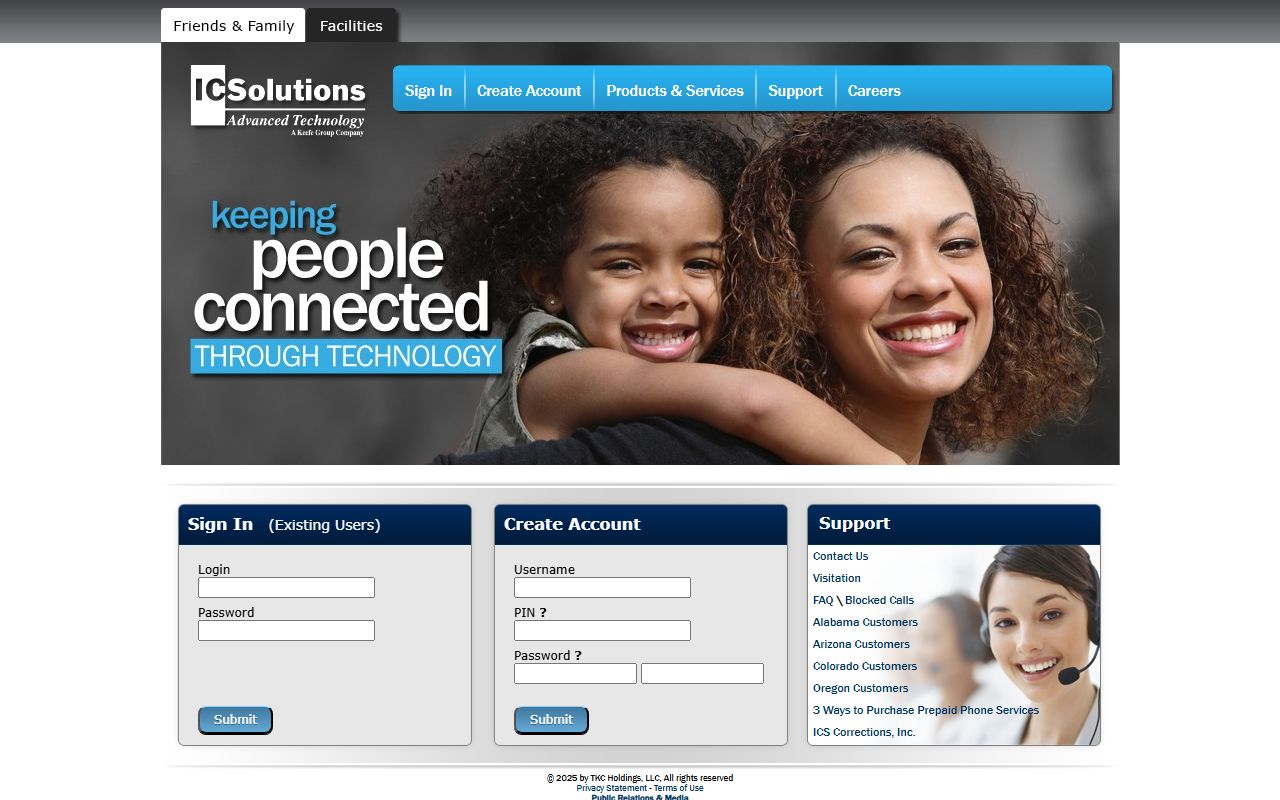
Some services connected to the Lucas County Corrections Center are run by private vendors rather than the county itself, and they operate outside the Ohio Public Records Act framework. Jail phone services are provided through ICSolutions. The screenshot below comes from the ICSolutions website, which handles phone account setup and call payments for inmates at the Lucas County Corrections Center.
General funds and commissary deposits for inmates are handled through Access Corrections. The image below comes from the Access Corrections website, which provides the account portal for sending money to people held at the Corrections Center.

Paying for jail phone access or depositing commissary funds through these vendor systems is a separate transaction from filing a public records request. Neither vendor holds county records covered by the Ohio Public Records Act. For questions about jail custody status, use the Lucas County inmate records page. For arrest records and criminal records from the Sheriff, see the arrest records page.